Last week, we headed to the 34th edition of MSPO in Kielce, running from the 8th to the 11th of September. By most measures it was the biggest yet: close to a thousand exhibitors, a new hall opened to take the overflow, Canada as this year’s Lead Nation, and delegations from all over. Four days of walking and talking to people at the forefront of the defence industry.
You learn things at an event like this that you cannot learn from a report. Here are the five that stuck with us.
1. The industry is moving fast
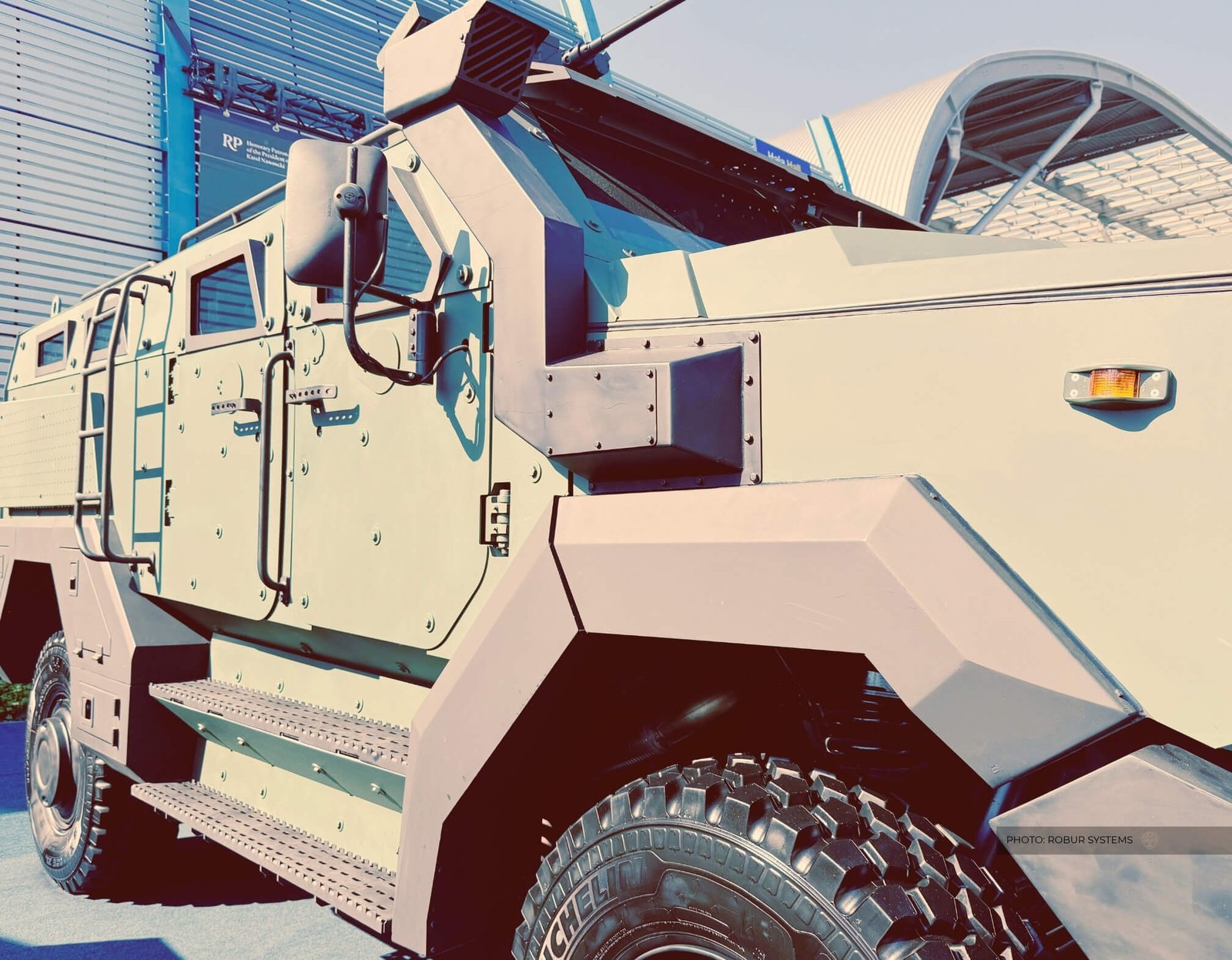
The first thing you notice is how much is genuinely new. Not repackaged entries from last year with a fresh coat of paint, but real capability that did not exist a couple of years ago. Drones of every size and purpose. Counter-drone systems built to intercept them. Radar, electro-optics, loitering munitions, ground robots, vehicles of every size, missiles, and everything in between. The new hall, built for heavy vehicles and advanced systems, was full.
This is easy to enjoy as spectacle and easy to underestimate as strategy. A defence industry that moves quickly is a form of security in itself. You do not buy deterrence once and keep it on a shelf. You have to keep renewing it, faster than the other side can catch up. What I saw at Kielce is what that bleeding-edge innovation actually looks like on a trade-show floor.
The uncomfortable part, if you are a supplier, is that the bar keeps rising. What counted as advanced last year is old technology today.
2. Ukraine is a major player
Ukraine carries serious weight in any room it enters. A country that started out defending itself (remember when most thought Kyiv will fall in 4 days?) has become one of the most important sources of hard-won knowledge in the industry. Everyone knows it and respects it.
Ukraine has something nobody else has: current, real combat experience. Their engineers and operators are testing missiles, drones, jammers, and countermeasures in a live fight, and improving them in weeks rather than years. They are learning things about autonomy under jamming, cheap attritable systems, and the actual economics of modern war that you cannot replicate on any test range.
For NATO this is not a favour to Ukraine. It is the other way around. If the Alliance wants to keep its technological edge over the next decade, it has to learn from what Ukraine is doing now, and learn at the speed Ukraine is doing it. The old rhythm, where requirements crawl through committees for years, cannot keep up with a battlefield that changes over a weekend. The companies that build a way to take frontline feedback and act on it quickly are the ones that will matter. That work has clearly started. It needs to go further.
3. Small companies have a unique opportunity
You might assume a market full of primes and national champions leaves nothing for anyone else. What we found is the opposite. Some of the best conversations we had were at small stands, companies of ten or twenty people doing one thing extremely well.
This market is nowhere near full. New threats open new gaps faster than the big players can close them, and those gaps are where smaller companies do their best work. A small team can take an idea to something field-ready far quicker than a large organisation can, because it does not have to drag the idea through six layers of red tape first.
That is the real advantage of being small. Speed. You decide in a conversation, not a quarterly review. You are not carrying the bureaucracy that slows the big firms down, and you can change direction when the situation demands it. In a market where the tempo of change decides who wins, that is not a disadvantage you apologise for. It is your edge.
The thing holding small companies back has rarely been capability. It has been getting in the door and being trusted once you are through it. I will come back to that.
4. Nobody builds anything alone
Defence has always been a team sport. No single company makes a modern capability by itself. A vehicle needs a radar, a DVE, an anti-drone system. This requires the work of dozens of specialists, and that has been true for a long time. What Kielce reminded us is how much more true it is now, and how much appetite there is to work together.
Modern systems are so complex that integration is the whole game. The companies that do well are the ones that partner well. They make their piece easy to plug in. They treat the other suppliers as partners instead of rivals.
For a small or mid-sized supplier, this is the opening. You do not need to build the whole system. You need to build your part better than anyone else and make it easy for others to build around it. There is a lot of room for manufacturers and service providers to work together across the Alliance, and the ones who lean into that will find more doors open than they expected.
There is a catch, though, and it is the last thing I took away.
5. You have to speak a common language
Everything above depends on trust. Fast innovation, learning from Ukraine, letting small suppliers in, deep collaboration between companies that have never met. None of it works if the people involved cannot trust each other. And trust between organisations in different countries cannot always run on personal relationships and good intentions. It has to run on something shared.
In our world that something is a recognised standard. When a prime in one country brings on a supplier in another, they cannot inspect every process themselves. What they can do is ask for compliance with a standard they both know, and trust that a supplier who meets it builds quality the way they would expect. The standard turns “I hope these people are reliable” into “these people meet a bar we both recognise.”
There is more than one of these languages, and they all matter. ISO 9001 is the global baseline that almost everyone starts from. AS9100 and EN 9100 carry the weight in aerospace. Different sectors and nations have their own. None of them is the “right” one in some absolute sense. Each exists because a group of people needed a shared way to trust each other’s work, and each does that job well.
For NATO defence work, the language is AQAP, the Allied Quality Assurance Publications. That is the one we happen to work in, because it is the one that opens NATO contracts and lets a small supplier earn the confidence of a much larger partner without either side starting from scratch. But the point is bigger than any single standard. The point is that you need to speak the shared language your work calls for, whichever it is. Pick the one your market runs on and learn it properly.
What I will say for AQAP specifically is that building to it does more than tick a box. It makes the business underneath it better: cleaner processes, less waste, managed risk, traceability you can actually rely on, decisions you can make faster because you know where things stand. That is worth having whether or not a contract ever asks for it.
For the small companies I met at Kielce, with the sharp ideas and the speed to deliver, a recognised standard is the bridge between having a good product and being trusted to put it into someone else’s system. Learning the common language is not red tape. It is the price of the collaboration this industry runs on, and it pays for itself.
Thank you to everyone who made MSPO run
An event this size does not run itself, and it is easy to talk only about the exhibitors and the big announcements while forgetting the people who made four days work.
Thank you first to the organisers at Targi Kielce and everyone who planned and ran the 34th MSPO. Moving close to a thousand exhibitors and thousands of visitors through nine halls is a serious piece of work, and it showed in how smoothly it went. Registration was quick. The layout made sense. The whole thing had the calm of an event that had been prepared properly.
That calm rested on a lot of people who rarely get named. The security teams who kept a high-profile event safe and still welcoming. The maintenance and facilities crews who kept nine halls running. The cleaners who worked round the clock to keep the place fresh. The food and drink teams who kept thousands of us fed and caffeinated through long days. The stand builders, the technical crews, the transport and parking staff.
None of those jobs make the news. All of them are why the event worked. To everyone who had a hand in it: thank you. Your work was felt, even when it was not seen.
I left Kielce tired, full of ideas, and already thinking about next year.
One last thing…
If MSPO confirmed anything for me, it is that there has rarely been a better time to be a capable defence supplier who can earn trust across the Alliance. A recognised quality standard is how you earn it.
We work in AQAP because it is the language of NATO defence contracts. At Robur Systems we help companies build an AQAP-compliant quality management system, from a first honest look at where you stand through to certification. If that is the language your work calls for, we can help you speak it with confidence.
Get in touch and we will tell you where your quality system stands today, and what it would take to open the doors we saw opening at Kielce.

Comments are closed